Small cars



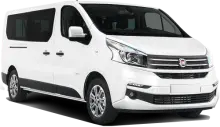


Choose the right car for your trip in Krakow, Poland and book in minutes. Compare trusted rental options, find great daily rates, and secure convenient airport pick-up for your travel dates.
Car rental at Krakow Balice Airport (KRK) is most appropriate when Krakow is only the first point of the route, rather than the only place of stay. For this airport, such logic is especially clear: some passengers head further immediately after arrival, some plan several addresses in the city itself, and some need a car because of luggage, a family trip format, or limited time on the day of arrival. In such cases, car rental at the Krakow airport allows you to start your route without an additional transfer to the city and without a separate stage of searching for a car after the journey.
If the trip takes place only within the central part of Krakow and no further trips are planned, a car is not always needed from the first hour. But the situation changes when the route includes several locations, early departures, staying in more than one place, or further travel after arrival. This is where airport rental works best: instead of traveling separately to the city and then spending time again to pick up a car, the passenger immediately moves to the next stage of the trip. For KRK, this is especially practical when clear logistics without unnecessary transfers are important.
Before booking, it is worth finding out exactly how the pickup is organized. Different companies may have pickup at the airport or at a separate point nearby, and this difference matters specifically after arrival, when luggage has already been collected, and you want to spend time on the road according to the route, rather than searching for the correct counter. For KRK, it is useful to clarify whether a flight number is needed, how late pickup works, and what happens in case of a flight delay. The better the pickup scheme is understood before the trip, the fewer risks of encountering unnecessary confusion on site.
For car rental at Krakow Balice Airport, a driver's license, an identity document, and a bank card in the name of the main driver are usually required. If the tariff or company rules require an additional document, this should be checked before the trip. In practice, problems often arise not because of the booking itself, but because of small inconsistencies: a different name on the card, an insufficient limit for the deposit, or documents that do not fit the rental conditions. That is why it is better to keep the booking confirmation and key rental rules at hand even before arrival, rather than searching for them at the pickup counter.
For KRK, you should not rely solely on the lowest price. A cheaper tariff may turn out to be less advantageous if it has a high deposit, strict rules for changing the pickup time, weak insurance coverage, or an inconvenient fuel policy. It is better to choose a tariff based on the real structure of the route: whether there will be several passengers, how much luggage needs to be accommodated, whether longer trips are planned, or if flexible return before departure is important. If the trip is not limited to a short city segment, the difference between a cheap price in search and convenience in reality becomes very noticeable.
| Parameter | What to pay attention to |
|---|---|
| Deposit | Check the blocking amount and available limit on the card |
| Excess | Evaluate what part of the responsibility the driver takes on |
| Insurance | Clarify which risks are included in the coverage and which are not |
| Pickup Time | The tariff must correspond to the actual arrival time |
| Car Class | Choose a car for the passengers, luggage, and nature of the route |
| Return | Check the return procedure before the flight in advance |
Before confirming the rental, it is worth reviewing not only the base rate, but also the fuel policy, payment method, payment terms, cancellation conditions, the possibility of changing the pickup time, and the return format. For KRK, this is especially useful if the route starts immediately after the airport and does not leave much time to correct errors on site. At this stage, it becomes clear whether the tariff truly fits your trip, rather than just looking advantageous on the screen.
For Krakow, this advantage is felt when, after landing, you do not want to make another intermediate stage of traveling to the city without a car. If there is an evening arrival, luggage, several route points, or the need to move further on the day of arrival, a car at KRK is usually more logical than a city rental office. The main benefit here is not in abstract freedom, but in the that the trip starts immediately after the airport without an unnecessary logistical loop.
Returning the car on the day of the flight is better planned with a time buffer. You need to take into account not only the road back to KRK, but also finding the return zone, a brief inspection of the car, handing over the keys, and moving to the terminal. If the rental operates under the rule of returning with the same fuel level, this should also be kept in mind before the last day. It is often at the stage of returning the car that it becomes evident how successfully the tariff conditions were chosen.
Before starting the rental, it is better not to rush. Inspect the body, glass, wheels, interior, and fuel level, record all noticeable damage on photos and compare them with the documents. It is also worth ensuring that the issued car class corresponds to the booking and that the company's contacts are saved in case of delay, change of plans, or a technical situation on the road. These few minutes often help avoid unnecessary disputes during the return.
Usually, a driver's license, an identity document, and a bank card in the name of the main driver are required. Before booking, it is also worth checking the requirements for an international driving permit, the driver's age, and the deposit blocking conditions to avoid problems during car pickup. If you arrive late or have a tight schedule, it is better to ensure before the flight that all documents exactly match the company's requirements.
The minimum age depends on the company, car category, and tariff conditions. Therefore, before paying for the booking, it is better to check not only the basic age requirement, but also possible surcharges for young drivers or restrictions on certain car classes. Sometimes a cheap tariff looks attractive only until additional age fees or restrictions on car choice appear.
Excess is the part of the driver's responsibility in case of damage or another insurance event. That is why when comparing tariffs, it is important to look not only at the daily rate, but also at the financial risk you actually take on. If peace of mind during the trip is important to you, it is sometimes more profitable to choose a tariff with better coverage immediately, rather than just a lower base price.
This depends on the type of your documents and the rules of the specific rental company. To avoid refusal of car issuance after arrival, it is better to clarify this requirement before booking, rather than at the pickup counter. For an international trip, this is one of those details that is better to settle in advance, even if the rest of the tariff conditions fully satisfy you.
Before the trip, it is useful to evaluate not only the rental tariff itself, but also accompanying costs: fuel, parking, possible road tolls, and the general logistics of the route. This helps to understand the real cost of rental, rather than just the starting price in the search results. If the route is active and includes several locations, such costs may not be a trifle, but a noticeable part of the overall budget.
Companies often expect a card on which a deposit can be blocked. That is why before booking, it is better to check not only the payment method itself, but also the deposit conditions to avoid an unpleasant situation after arrival. If you have only a certain type of card or a limited limit, this point is better to clarify before confirming the rental.
In such a situation, it is important to act according to the rental company's instructions and not delay reporting the incident. That is why before leaving, it is useful to understand which contacts are needed, how the incident is documented, and what coverage conditions apply in your tariff. The better you know the procedure in advance, the that less stress there will be if something happens during the rental.
This depends on the specific tariff. Before booking, it is worth looking not only at the fact of insurance existence, but also at the volume of coverage, the excess, and the risks that remain your responsibility. If control over costs in case of an incident is important to you, sometimes a tariff with better coverage will be a more peaceful choice than just the lowest price.
Sometimes yes, but this depends on the company, tariff, and specific route. If such an option is important to you, it needs to be checked before booking, as it can affect both availability and the final cost of the rental. For trips with several route points, one-way return is sometimes very convenient, but that is why its conditions should be clarified in advance.
Yes, if the choice of car class, clear conditions, and better budget control are important to you. Advance booking helps to compare the tariff, insurance, deposit, and pickup format more calmly, and not make decisions after arrival. For popular dates and convenient car categories, this also gives more chances to get exactly the option that fits your route.
Such restrictions depend on the company and tariff, therefore they are better checked before payment. If you plan an active route with several locations, this point can significantly affect the final cost of the rental. For longer trips, the mileage limit is sometimes not a trifle, but a key condition for choosing between two similar tariffs.