Small cars



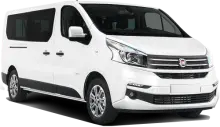


Choose the right car for your trip in Bangkok, Thailand and book in minutes. Compare trusted rental options, find great daily rates, and secure convenient airport pick-up for your travel dates.
Car rental at Bangkok airport is not automatically a good solution just because a car is available immediately after arrival. For Suvarnabhumi Airport, everything depends heavily on what exactly you do after landing. If Bangkok is just a large transit hub for you before heading further, a car from BKK can be a very successful start. However, if you spend your first few days only in the city itself, renting immediately at the airport often proves to be less convenient than it seems during booking.
This is one of those airports where the "price per day" is less important than an honest assessment of the trip format. Bangkok is large, congested, with paid expressways, difficult parking, and traffic in which a rental car on the first day does not always provide a sense of freedom. On the other hand, for leaving the city, moving between several addresses, or starting a road trip across the country, KUL-like logic no longer works: at BKK, a car is often justified specifically as a tool for leaving the metropolis, rather than living within it.
For BKK, a car works best in a scenario where Bangkok is not the final destination. For example, if you head out on the highway immediately after your flight, travel between several cities, have a busy itinerary, or simply do not want to spend a separate day picking up a car later. In such a case, airport pickup reduces the number of transfers and allows you to start your route without an additional logistical loop.
Conversely, if your first few days are just central Bangkok, a hotel, a few city districts, and short movements within the metropolis, renting from BKK is often not the most practical choice. The car then does not so much move the itinerary forward as it adds decisions about parking, toll roads, maneuvering in dense traffic, and adapting to left-hand traffic immediately after a flight.
| Scenario | Rental from BKK | Why |
|---|---|---|
| Only a few days in Bangkok | Often not necessary | Traffic and parking may outweigh the benefits of a car |
| Immediate departure from the city | Yes | The car starts working for the route right from the airport |
| Several addresses on the day of arrival | Often yes | Easier to manage luggage and time |
| Family with suitcases and further travel | Often yes | Fewer transfers and a calmer start |
| City trip without active departure further | More often no | The car may create more friction than benefit |
In the case of Suvarnabhumi Airport, the main mistake is looking only at the starting rate. For a real choice, other things are more important here: where exactly the pickup point is located, how much time will actually be spent getting the car, whether a shuttle is needed, how the company handles flight delays, what deposit is blocked on the card, and how transparently the return conditions are described.
For BKK, convenience often wins over the "cheapest tariff." If one offer is slightly more expensive but has a clearer pickup logic, clear conditions regarding late arrival, and less financial uncertainty, it can ultimately be a better solution than the minimum price in the search.
For rentals in BKK, it is important not only how much the car itself costs, but also how much risk remains with you. A large deposit, a high deductible, unclear rules regarding minor damage, or a not entirely transparent insurance logic make a cheap rate less attractive already at the pickup stage.
If you have a choice between tariffs that are almost identical in price, it is wiser to look at the one with simpler rules, a smaller deposit, and clearer coverage. For a route that begins immediately after a flight, predictability is sometimes more valuable than small savings.
In Thailand, it is important to consider left-hand traffic. If you are not used to it, and you also enter Bangkok's traffic immediately after a flight, choosing a car becomes not just a question of budget, but also of controllability. A car that is too large may be less convenient than it seems at the booking stage, especially if the first few kilometers pass through dense city traffic, overpasses, and high-speed entrances.
For BKK, this means that the optimal car class is not necessarily the largest available. If the route further does not require large capacity, a more compact option sometimes proves to be wiser, especially for the first day.
For Bangkok and its surroundings, road tolls are not a trifle. If after arrival you will be actively moving between the airport, the city, and highways further, expressway costs quickly become part of the total cost of the route. Therefore, even before booking, it is important to understand exactly how toll road payments are organized in your tariff and whether additional surprises will arise after returning the car.
Because of this, BKK does not like superficial decisions. It is important to understand not only the rental price, but also the entire road context in which the car will be used.
If you are flying to Bangkok for only a few days and do not intend to immediately travel further through the country, it is not a fact that a car from the airport is actually needed. In such a scenario, renting from the first day often means that the car stands still more than it works for the route. For BKK, this is a common situation, not an exception.
Therefore, sometimes the wisest decision is not to give up rental entirely, but to pick up the car later, when the route goes beyond the city limits and the car begins to actually save time.
Returning the car to BKK should be planned with a time buffer not only for the road to the airport, but also for the airport logistics itself. It is important to consider the correct entrance to the return zone, a possible short inspection, the handover of keys, and the way back to the terminal. In large airports, this last stage often takes more time than it seems at the beginning of the trip.
Also, separately check how after-hours returns work if the flight is early morning or very late, and whether there are fuel requirements. For BKK, such nuances are better known in advance, rather than at the moment when you already need to rush to the flight.
In summary, car rental at Bangkok airport works really well when the car is needed not for Bangkok itself as such, but for a route that begins after it. If you are traveling further through the country, want to avoid an additional return for the car, and are ready for left-hand traffic and road tolls, renting at BKK can be a very convenient start. If the plan is limited to the city itself, it is better to first honestly assess whether the car will become an unnecessary complication.
An international driving permit, passport, and credit card are required.
Usually 21 years old, but some companies require 23 or 25 years.
CDW is collision damage waiver. It is recommended to consider it to reduce financial risks.
The deposit is blocked on your credit card and returned after returning the car undamaged.
Usually a credit card is required for the deposit.
Yes, some highways have toll sections.
Look for designated parking lots or parking zones.
Usually 90 km/h on highways and 50 km/h in cities.
Immediately notify the rental company and fill out a damage report.
Yes, motorcycles and scooters are very common, be careful.
It is recommended, especially if you plan to visit remote areas.
Usually this is prohibited, you need to clarify with the rental company.