Small cars
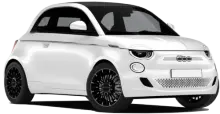
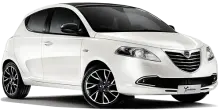
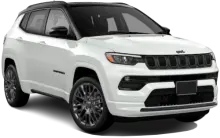
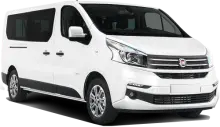
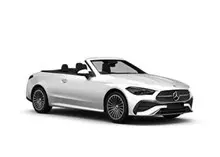

Choose the right car for your trip in Frankfurt, Germany and book in minutes. Compare trusted rental options, find great daily rates, and secure convenient airport pick-up for your travel dates.
Car rental at Frankfurt Airport (FRA) is not suitable for every trip. If you are arriving for a short visit and plan to spend a few days only in Frankfurt itself, a car on the first day is not always the most convenient solution. But if after arrival you are traveling further through Germany, visiting several cities on one route, attending business meetings outside the center, or do not want to spend time on a separate pickup at a city rental office, airport pickup at FRA is often justified and practical.
The main advantage of renting directly at the airport is that you pick up the car immediately after arrival and do not waste time on additional logistics. For Frankfurt Airport, this is especially convenient if your route is not tied only to central Frankfurt from the start. If you spend a few days mainly in an urban scenario, it is useful to honestly assess whether it would be more practical to postpone the rental until the moment the car actually starts saving time, rather than creating new costs for parking and road logistics.
For FRA, this is especially important because it is a large airport hub with terminals and good connections to the city. That is why a car here should not always be taken by default just because it is available after landing. If Frankfurt Airport is for you only a convenient entry point into Frankfurt, rental on the first day may turn out to be redundant. If the airport is the start of further travel through Germany, airport pickup often saves both time and energy after the flight.
| Scenario | Is it worth taking a car in FRA | Why |
|---|---|---|
| First days only Frankfurt | Not always | In the city, a car can be less convenient than it seems at the start |
| Immediately traveling through Germany | Yes | You can start the route without returning separately to the rental issue |
| Several cities in one trip | Often yes | A car works better for a sequential intercity route |
| Family or business trip with luggage | Often yes | Fewer movements after arrival and more control over the schedule |
For FRA, it is important to look not only at the daily rate, but at the entire package of conditions. Before paying for the booking, check which driver's document format the company accepts, which card is suitable for the deposit, what limit must be available, what is included in the insurance, what deductible remains for the driver, whether there are surcharges for automatic, a second driver, a child seat, or return at another point. For a route through Frankfurt, it is also worth assessing parking, the urban scenario, and possible exits outside Germany in advance.
A good trust signal for Frankfurt is a tariff where key conditions are clear before payment: which document and card type are actually accepted, what happens in case of flight delay, whether late pickup is provided, how the deductible is described, and how the return is organized specifically at the airport. If these things are written vaguely, a cheaper rate often turns out to be less convenient during pickup.
| What to check | Why it is important |
|---|---|
| License format and documents | Without the required document, pickup may not be confirmed even with a voucher |
| Card and deposit | Not every card is suitable for the security deposit, and the blocking amount can be significant |
| Deductible and insurance | A low rate does not equal low financial risk |
| Parking and urban scenario | These often determine whether a car is justified in the first days |
| Cross-border conditions | For a route to neighboring countries, this is critical before payment |
In different rental companies at FRA, the car pickup scheme may differ: sometimes the desk is located within the airport complex, and sometimes the car itself is in the rental zone or a separate parking lot. Before the trip, it is better to have clear instructions: where the registration is, where the pickup is, how the company handles flight delays, and what exactly needs to be shown at pickup.
For a large airport with terminals, a good trust signal is when it is clear before payment exactly where the pickup takes place, how to get to the required point after your terminal, and whether the pickup logic changes in case of evening or shifted arrival. Such practical details are what distinguish a truly convenient airport pickup from an option that looks good only in the catalog.
For FRA, the key question is not only whether you can take a car, but whether you need it from the moment of arrival. If you quickly move to an intercity route, a car often gives more freedom and works better for the trip. If you spend a few days mainly in Frankfurt itself, it is useful to find out before booking whether your hotel has parking, how much it costs, how convenient it is to get there, and whether it would be more practical to postpone the rental until the moment of departure from the city.
Separately, you should think about autobahns and longer trips. For some routes through FRA, this is one of the main reasons to take a car immediately, but that is why it is important to look not only at the rental price, but also at how the tariff works in a real road scenario: with the deductible, deposit, return rules, and additional costs.
One of the typical mistakes is to rely only on the label about included insurance. For FRA, it is important to understand what liability actually remains with the driver, what the deductible amount is, whether glass, tires, mirrors, and the lower part of the body are included, and what exceptions remain in the conditions. If the route includes longer trips or leaving the urban environment immediately after the flight, it is sometimes more practical to take not the minimum tariff, but a more transparent package with less financial risk.
A good tariff for Frankfurt is not just a low figure in the catalog, but a package that works in your real scenario: documents are suitable, the deposit is manageable, late pickup is clear, and the insurance does not leave too much uncertainty after arrival.
Returning the car at Frankfurt Airport is best planned with a buffer. Before the flight, you need to consider the road back to the airport, possible refueling, searching for the exact return zone, car inspection, and the time to get to the terminal if the parking lot is separate. For morning flights or a route after a longer trip, this is especially important.
For a large international airport, this has a separate significance: even when the road to FRA seems simple, the final stage can take more time due to refueling, inspection, and the internal logistics of the airport itself. A practical buffer before returning is almost always more useful than an optimistic calculation by the minute.
| Before returning | What should be done |
|---|---|
| Fuel | Check the return policy and refuel the car in advance |
| Return point | Save the exact address or map from the rental company |
| Time buffer | Allow extra time for car inspection and the road to the terminal |
| Return confirmation | Save the document or photo in case of deposit disputes |
Car rental at Frankfurt Airport is best justified when the car is needed immediately after arrival and actually helps the route beyond a purely urban scenario. For a correct decision, not only the price and car class are important here, but also practical details: documents, card for deposit, deductible, insurance, parking, route, possible exit to other countries, and return before departure. These are what determine whether the rental in FRA will be truly useful and justified.
Driver's license, passport, and a credit card in the driver's name.
Age requirements depend on the company, car category, and tariff conditions. Before booking, it is worth checking not only the basic age limit, but also possible surcharges for younger drivers and restrictions for certain car classes.
Collision Damage Waiver insurance.
The amount you pay yourself in case of damage or theft.
It may be required if your license is not in Latin letters.
Usually in the arrivals area, in the basement of the terminals, or nearby.
For passenger cars, most roads are free, but there are toll roads for trucks.
The deposit is blocked on your credit card and returned after the car is returned.
Yes, by purchasing additional insurance, but this will increase the rental cost.
Often there are none, but it is recommended to follow a reasonable speed.
Immediately notify the rental company and fill out a damage report.