Small cars



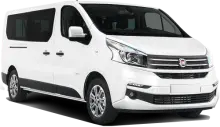


Choose the right car for your trip in Nuremberg, Germany and book in minutes. Compare trusted rental options, find great daily rates, and secure convenient airport pick-up for your travel dates.
Car rental at Nuremberg Airport (NUE) is most justified when a car is needed not just for a single transfer, but for a real itinerary immediately after arrival. For this airport, such logic is particularly practical: Nuremberg is often not the final destination, but the start of a further trip through the city and beyond into Bavaria or Germany, where a car is needed from the first hour after the flight. If it is important to get into a car quickly after landing, store luggage and not spend time on a separate trip to the city for a car, car rental at Nuremberg Airport usually provides a more direct and predictable start to the route.
That is why the decision to rent in NUE should be made not only based on price. If the car starts working on the route already on the day of arrival, airport rental often saves time and energy. If the trip is limited to a single city location and does not involve active trips further, it is sometimes more logical to pick up the car later, when it truly becomes necessary.
The main advantage of rental at Nuremberg Airport is that the route begins immediately after landing. This is especially convenient for trips with suitcases, staying in several places, a business schedule with several points, or traveling further through Bavaria or Germany without an unnecessary pause in the city. If you do not want to split the day into a separate transfer, check-in, and a second trip for the car, NUE often provides the simplest starting logic.
| Scenario | Is it worth taking a car in NUE | Why |
|---|---|---|
| A few days only in Nuremberg | Often no | A car may add parking hassles and not provide enough benefit from the first day |
| Going further into Bavaria or between several cities immediately | Yes | The route can be started immediately after arrival without separate city logistics |
| Several addresses on the day of arrival | Often yes | Fewer transfers and easier time control |
| Business trip with a tight schedule | Often yes | Airport rental reduces time loss between the flight and the first point of the route |
| Short city-only weekend | More often no | A car from the first day may be less practical than it seems during booking |
In NUE, it is worth checking in advance exactly where the pickup point is located: directly in the airport complex, in a separate parking lot, or with a short transfer. For a passenger after a flight, this is not a trifle, but a real part of the first day's logistics. It is also important to understand whether the flight number needs to be provided, how the company reacts to flight delays, and whether the booking is canceled in case of late arrival.
A reliable option for NUE is not just a low rate, but a clear pickup procedure. If it is clear even before payment how to reach the rental point, what documents are needed, whether pickup is available at your time, and what to do in case of a flight delay, you significantly reduce the risk of an unnecessary pause immediately after landing.
For car rental at Nuremberg Airport, a driver's license, an identity document, and a bank card in the name of the main driver are usually required. If the license is not duplicated in Latin script, an international permit may be needed, and it is better to check this before the trip. It is also worth clarifying requirements for age, driving experience, additional drivers, and the type of card for blocking the deposit.
In practice, problems at pickup are often related not to the booking itself, but to an unsuitable card, an insufficient limit for the deposit, or a discrepancy in driver data. That is why the tariff conditions should be read calmly before departure, rather than at the pickup counter.
For NUE, you should not rely solely on the lowest starting price. The deposit amount, the size of the deductible, and the actual scope of insurance coverage are important. A cheaper tariff may look attractive until the moment of receiving the car, but turn out to be less convenient due to a large block on the card or less transparent liability conditions in case of damage.
If two options are similar in price, it is sometimes wiser to choose the one with a smaller deposit, more clearly described insurance, and simpler rules for changing the pickup time. For a route that begins immediately after the flight, transparency of conditions is often more important than a minimal difference in the daily rate.
| Parameter | What to pay attention to | Why it is important |
|---|---|---|
| Deposit | Blocking amount and card requirements | Common cause of difficulties during pickup |
| Deductible | Which part of the risk remains with the driver | Shows real financial responsibility |
| Insurance | What is included in the coverage and what is not | Helps evaluate how peaceful the tariff truly is |
| Pickup time | Does it correspond to the actual arrival time | Critical for evening or shifted flights |
| Car class | Does it fit the luggage, passengers, and route format | A poor choice is felt from the first day |
| Return | Rules for returning at the airport and outside working hours | Affects peace of mind before the return flight |
For a short trip around the city, a compact car may be enough, but for an active route through the region, the car class should be chosen more carefully. If traveling with suitcases, several passengers, or planning many transfers, not only fuel costs but also comfort on the road, luggage space, and parking convenience after arriving in the city or at subsequent stops become important.
Before paying for the booking, check the fuel policy, cancellation rules, the possibility of changing the pickup time, conditions for a second driver, as well as whether the rental company allows trips to neighboring countries, if such a scenario is possible. For NUE, this is not a secondary detail: for some cross-border routes, it is better to understand the conditions at the tariff selection stage.
If the trip is limited only to Nuremberg, and in the first few days you do not plan to travel actively further in the region, a car from the moment of arrival may not be mandatory. In such a scenario, it is sometimes more profitable to postpone the rental until the day the car actually starts working on the route. This helps avoid paying for idle days and dealing with parking earlier than necessary.
Returning the car at Nuremberg Airport is better planned with a time buffer. You need to account for the road back to the airport, finding the correct return zone, a possible car inspection, handing over the keys, and the time to get to the terminal. If the tariff requires returning with the same fuel level, it is also better to think this through in advance, rather than at the last minute.
It is also worth clarifying how returns work outside working hours if the flight is early or very late. For NUE, this is an important part of peaceful logistics on the last day, not a formal detail.
In summary, car rental at Nuremberg Airport is most justified for a route that begins immediately after arrival and is not limited to a single city location. If you check the documents, deposit, insurance, pickup and return procedures, as well as the conditions for possible trips further in the region, rental in NUE can become a truly convenient start to the trip without unnecessary fuss.
Driver's license, passport and credit card in the driver's name.
Usually 21, but some companies require 23 or 25.
This is the amount you will pay yourself in case of damage or theft of the car.
It may be required if your license is not of European standard.
Most companies only accept credit cards for the deposit.
Most roads are free for passenger cars, but there are toll roads for trucks.
They are usually located in the main terminal, near the exit to the parking area.
This is insurance against damage to the car as a result of a collision.
Yes, by purchasing additional insurance, but this will increase the rental cost.
Often there are none, but it is recommended to maintain a reasonable speed.
Immediately notify the rental company and fill out a damage report.