Small cars



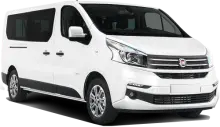


Choose the right car for your trip in Seoul, South Korea and book in minutes. Compare trusted rental options, find great daily rates, and secure convenient airport pick-up for your travel dates.
Car rental at Seoul Incheon Airport (ICN) does not make sense in every scenario. If you have flown to South Korea for Seoul itself and plan to spend a few days in the central districts, the metro, AREX, and taxis are often simpler than a car. But if your route begins immediately after arrival, you are traveling as a family with luggage, plan several stops outside the capital, or want to head directly toward Incheon, Suwon, Sokcho, Gangwon-do, or intercity highways without transfers, getting a car directly at ICN is usually more convenient than returning for it in the city.
The main advantage of airport pickup in Incheon is that you settle your logistics immediately after the flight. This is especially useful after a night arrival, with children, large suitcases, or a tight schedule, when you do not want to spend time traveling to Seoul and then separately searching for a city rental office. At the same time, for trips around central Seoul, a car is not always the best choice: traffic is dense, parking is expensive, and some areas are inconvenient for a first introduction to local driving.
For ICN, the decision should be based on the route, not just because it is an airport. If Incheon is merely a convenient gateway to Seoul for you, a car in the first few days may be redundant. However, if the airport is the start of a further journey, airport pickup often saves both time and energy after an international flight.
Before paying for the booking, check not only the daily price but also the full structure of the terms. For ICN, this means: what documents the company accepts, whether an international driving permit is required in your specific case, what type of card is suitable for the deposit, what limit should be on it, and whether there is a difference between the basic coverage rate and an option with lower financial risk. A cheap rate on the first screen may turn out to be less profitable if the deductible is high, the deposit is substantial, and separate payments are added for a second driver, a child seat, or late pickup.
A good trust signal for Incheon is a rate where key terms are clear before payment: which document is needed, how the deposit works, what happens in case of flight delays, whether late pickup is provided, and how the return is organized specifically at the airport. If these points are described vaguely, the risk of unnecessary stress after arrival increases significantly.
At Incheon Airport, it is worth clarifying in advance exactly where the car will be issued. For some companies, the paperwork is done in the terminal, and the car is received in the rental area or at a separate lot with a short transfer. If you arrive late, it is critical to check if the flight number is indicated in the booking, how the company handles delays, and until what hour the desk actually operates. For ICN, this is not just a formality: after a long international flight, an extra 40–60 minutes searching for the correct pickup point are felt much more strongly than during a domestic trip.
For a large airport with terminals, a good trust signal is when it is clear before payment exactly where the pickup takes place, how to get to the required point from your terminal, and whether the pickup logic changes in case of an evening or shifted arrival. Such details make airport pickup at ICN truly convenient, rather than just formally available.
Before leaving the parking lot, it is useful to take a few simple steps:
For many travelers, the first difficulty in South Korea is not the driving itself, but the road ecosystem: toll highways, parking lots, navigation, access rules for certain zones, and the habit of relying not only on Latin script but also on Korean names. If you are traveling a long distance immediately after ICN, it is worth ensuring you understand how toll roads are paid, whether these costs are included in the rate, or if a separate transponder is needed or if accounting will be done in another way.
For trips to Seoul or around the capital, parking practices should also be considered. If the hotel is in the central part of the city, it is useful to find out in advance if it has its own parking, whether it is paid, and if it is suitable for a car of the required class. Often, this point makes rental less convenient than it seems at the booking stage. That is why for ICN it is so important to honestly distinguish between two scenarios: a few days in Seoul without an urgent need for a car, and a route that immediately goes further into the country.
The most common mistake is to look only at the presence of CDW or the phrasing "insurance included" without reading the details. For ICN, it is important to check what liability actually remains with the driver, what exceptions are written in the terms, whether tires, glass, the underbody, and mirrors are covered, as well as whether there is a difference between basic and extended coverage. If a longer route is planned or you do not want to argue about minor damage after return, it is sometimes better to immediately take a rate with clearer terms rather than the cheapest option at pickup.
A good rate for Incheon is not just a low figure in the catalog, but a package that works in your real scenario: documents are suitable, the deposit is manageable, late pickup is clear, and insurance does not leave too much uncertainty after arrival.
Returning the car to ICN should also be planned without haste. Before departure, allow time not only for the drive to the airport but also for refueling, finding the correct return zone, the vehicle inspection by the company representative, and the transfer back to the terminal if needed. If the flight is in the morning or the route passes through congested sections around the capital, a larger time buffer is needed than it seems on the map.
For a large international airport, this is especially important: even when the road to ICN seems simple, the final stage can take more time due to refueling, inspection, and the internal logistics of the airport itself. A practical reserve before return is almost always more useful than an optimistic calculation by the minute.
Car rental at Seoul Incheon Airport works best for those who travel further immediately after arrival, want to maintain control over the route, and do not plan to spend the entire trip in central Seoul. Before booking, not only the price and car class are important here, but also practical things: the pickup point, deposit, insurance terms, rules for your license, toll roads, parking, and the return scenario before departure. These details have the strongest impact on whether rental at ICN will be convenient or stressful.
For car rental at ICN, requirements depend on the country of issuance of your license and the policy of the specific rental company. This should be checked before paying for the booking: if the company does not accept your document format, the pickup may not be confirmed even with a voucher, passport, and card for the deposit.
In South Korea, rental payments and related charges are usually conducted in Korean Won (KRW), and the most convenient option is a bank card that is suitable for both the payment itself and for blocking the deposit. Before booking, it is better to check in which currency the company debits funds, whether there is conversion by the bank, and what type of card is actually accepted at pickup.
For rental at ICN, it is important not to treat the deductible as an abstract term in the rules, but to understand what amount of risk actually remains with the driver after booking. Before paying, it is worth checking how the deductible is related to the deposit, whether the tariff includes coverage for glass, tires, and the lower part of the body, and whether it would be more profitable to choose a clearer tariff if the route is long or begins immediately after arrival.
For rental at ICN, it is better to clarify this before confirming the booking, especially if the itinerary includes a non-standard travel scenario. Before paying, it is worth checking if the specific tariff allows this, whether separate approval from the rental company is needed, and whether such an option affects the deposit, insurance, or final rental cost.
For a route from ICN, toll road costs should be considered before leaving the airport, especially if you are traveling a long distance immediately. Before starting the rental, it is worth clarifying with the rental company exactly how payment is handled under your tariff, whether a separate system such as electronic toll collection is used, and how these costs may be reflected in the final settlement after returning the car.
If you take a car at ICN but spend the first few days specifically in Seoul, the parking issue should be checked before booking. It is useful to find out in advance whether your hotel has its own parking, whether it is paid, and how convenient the entrance is, or if it is simpler to postpone the rental until the moment of leaving the city.
For rental at ICN, this procedure should be clarified at the time of car pickup, so that in a stressful situation you already have the necessary contact of the rental company and understand the sequence of steps. If an accident occurs, it is important to immediately contact the company, complete local formalities, record the circumstances of the event, and not delay the notification until the time of returning the car, otherwise it may affect the insurance and deposit.
For rental at ICN, this needs to be checked before paying for the booking. Even if the tariff looks attractive, the pickup depends on the type of card the rental company accepts for the deposit, what limit is available on it, and whether the requirements change depending on the selected insurance. This helps avoid problems at the desk and ensures transparency before departure.
Such an option for ICN should be checked before confirming the booking. It is worth clarifying whether the required type of seat is available for your dates, whether it needs to be be added separately to the booking, and whether a separate fee is charged for it at the desk.
For returning the car to ICN, it is better to clarify the exact return zone, the fuel policy, the required time buffer, and whether additional time should be allowed for the car inspection or transfer back to the terminal at the time of pickup. This is especially important for morning flights and routes that end after a long trip.
For rental at ICN, this is better to check before paying for the booking, especially if you plan a longer route outside of Seoul. It is worth clarifying whether there is a mileage limit on your tariff, how additional kilometers are calculated, and whether this changes the final rental cost after returning the car.