Small cars


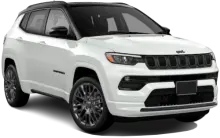



Choose the right car for your trip in Washington, United States and book in minutes. Compare trusted rental options, find great daily rates, and secure convenient airport pick-up for your travel dates.
Arriving at Ronald Reagan Washington National Airport (DCA) in Washington, D.C., is often the start of an exciting journey. Renting a car gives you the freedom to explore the city and its surroundings at your own pace. This information will help you navigate the rental process, understand potential costs, and prepare for driving in the United States.
Most car rental companies have counters directly at the airport. They are usually located in the arrivals area or in separate buildings near the terminals. Often, a free shuttle is required to get to the car, which runs between the terminal and the rental office location. Pay attention to signs in the airport to find the desired office.
The following car rental companies are usually represented at DCA airport: Avis, Budget, Enterprise, Hertz, National, and Alamo. The choice of cars is quite wide, from economy models to SUVs and luxury cars. Here are some popular options:
1. Economy Class (Fiat 500, Nissan Versa): ideal for city trips. 2. Compact Class (Toyota Corolla, Ford Focus): convenient and economical. 3. Mid-Size Class (Toyota Camry, Honda Accord): comfortable for traveling with passengers. 4. SUV (Jeep Compass, Ford Escape): suitable for trips outside the city and in the mountains. 5. Full-Size SUV (Chevrolet Tahoe, Ford Explorer): spacious and comfortable for large families. 6. Minivan (Chrysler Pacifica, Dodge Grand Caravan): ideal for large groups. 7. Luxury Car (BMW 3 Series, Mercedes-Benz C-Class): for those who appreciate comfort and prestige. 8. Sports Car (Ford Mustang, Chevrolet Camaro): for lovers of fast driving. 9. Pickup Truck (Ford F-150, Chevrolet Silverado): for transporting goods. 10. Hybrid Car (Toyota Prius, Hyundai Ioniq): economical and environmentally friendly.
Prices can vary significantly depending on the season, availability, and rental duration. Here are approximate prices (prices may vary depending on the season and availability):
| Car Class | Approximate Price per Day (EUR) |
|---|---|
| Economy | 30 - 50 |
| Compact | 40 - 60 |
| Mid-Size | 50 - 80 |
| SUV | 70 - 120 |
| Luxury | 100 - 200+ |
Please note that prices may vary depending on the season and availability.
To rent a car, you will need: a valid driver's license (international if your license is not in Latin characters), a passport, and a credit card in the driver's name. The minimum age for rental is usually 21 or 25 years old, but there may be additional fees for young drivers. A deposit is blocked on your credit card and returned after returning the car undamaged. Most major credit cards are accepted.
When renting a car, you will be offered various types of insurance. CDW (Collision Damage Waiver) covers damage to the car as a result of a collision. Theft Protection Insurance (TP) protects against theft. Excess Insurance reduces the amount you will have to pay in the event of damage or theft. Read the insurance terms carefully and ask the company representative about all the details. Check if your current insurance covers rented cars.
In the United States, traffic is right-hand. The speed limit is usually 55-70 miles per hour (88-112 km/h) on highways and 25-45 miles per hour (40-72 km/h) in cities. Many roads are toll roads, so have cash with you or use electronic payment systems. Parking can be expensive in large cities, so pay attention to signs and rates. Be careful of pedestrians and cyclists.
Driver's license, passport, and credit card in the driver's name.
Usually 21 or 25 years old, there may be additional fees for young drivers.
CDW covers damage to the car in the event of a collision. The need depends on your current insurance.
The deposit is blocked on your card and returned after returning the car undamaged.
Usually a credit card is required, but some companies may accept debit cards under certain conditions.
Have your booking confirmation with you and go to the rental company's counter.
Yes, some roads are toll roads, have cash or use an electronic payment system.
Compare prices from different companies and book in advance.
Immediately report this to the company representative and record the damage in the report.
Yes, but an additional fee (one-way fee) may be charged for this.
Yes, make sure the fuel level matches what is stated in the contract.