Small cars



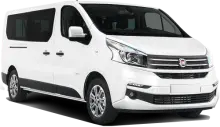


Choose the right car for your trip in Beijing, China and book in minutes. Compare trusted rental options, find great daily rates, and secure convenient airport pick-up for your travel dates.
Car rental at Beijing Capital Airport is not automatically a good idea just because a car can be picked up immediately after arrival. For PEK, it all comes down to the actual travel scenario: whether Beijing remains the only point of the itinerary or if the capital is just the first node before further travel. This is the main difference between "convenient to take a car at the airport" and "actually worth taking it right here".
Capital Airport often works well as a start for an itinerary that is not limited to the city center. If after landing you move beyond Beijing, have several addresses, travel with luggage, or do not want to separately return for a car later, rental in PEK can significantly simplify the first day. But if the first few days are spent only in Beijing itself, a car may provide less benefit than it seems during booking.
For Beijing Capital International Airport, the rental logic is closely linked to how you use Beijing. In a pure city-only scenario, a car does not always work for you: the dense urban environment, parking issues, road logic, and the general complexity of driving in the capital can turn a car into a source of additional decisions instead of freedom.
Instead, in a scenario where Beijing is just an entry point, everything changes. If the itinerary quickly goes beyond the urban core, a car from PEK often becomes a practical tool that saves one extra logistical link between the flight and the road ahead. For this airport, such logic is usually the strongest.
| Trip Format | Rental from PEK | Logic |
|---|---|---|
| Several days only in Beijing | Often not mandatory | The car may create more friction than benefit |
| Immediate departure beyond the capital | Yes | The car starts working for the itinerary immediately after arrival |
| Several addresses on the first day | Often yes | Fewer transfers and easier time control |
| Family trip with luggage and further travel | Often yes | Airport pickup removes the need to return for the car |
| Short city stay without active further travel | More often no | The car may stand still more than it actually helps |
For PEK, it is worth looking not only at the daily rate, but also at the full issuance logic. You need to understand in advance where exactly the rental point is located, whether there is a separate parking lot or shuttle, how the company handles flight delays, and how much time actually passes between arrival and leaving the airport. For a large capital hub, this is often more important than a small difference in price between tariffs.
Separately, you need to evaluate the entire package of conditions: deposit, deductible, card requirements, time change rules, return, fuel policy, and a potential one-way scenario if the trip does not close back in Beijing. For PEK, a good tariff is not the cheapest one, but the one with less uncertainty in the most important points of the itinerary.
For China, the issue of the right to drive and the set of documents needs to be checked before the trip itself. In the case of PEK, this is critical if you expect to get behind the wheel immediately after arrival and do not want to lose the first day clarifying formalities. It is not enough to simply have a booking — it is important that your specific set of documents fits the rental provider's conditions.
Also, check in advance whether the driver's data in the booking matches, whether the bank card is suitable for the deposit, and whether the limit is sufficient. These "details" are most often what break the rental not at the search stage, but already at the issuance counter.
For PEK, relying only on the lowest price is a bad strategy. It is much more important to understand what financial risk actually remains with the driver. If the deposit is large, the deductible is high, and the insurance coverage is described vaguely, a cheap rate may turn out to be less profitable than a slightly more expensive but more transparent tariff.
If the choice is between two close options, it is usually wiser to take the one with a smaller deposit, clearer insurance terms, and simpler issuance and return logic. For an itinerary that begins after a flight, predictability is often more valuable than symbolic savings.
One of the main mistakes for PEK is to view the car as a universally good solution for both the capital itself and for traveling further. In reality, these are two different formats of car use. Within Beijing, it can be less convenient due to urban density, parking, and the general rhythm of the road environment. For an itinerary outside the city — on the contrary, it can become the very tool that removes a lot of unnecessary logistics.
Therefore, the correct question is not "do I need a car in China", but "do I need it specifically from PEK and specifically in the first hours after arrival".
For PEK, the car class is better chosen based on the specific geography of the itinerary. If the first kilometers go through the capital environment, a too large car will not always be a plus. If, however, a longer trip, several passengers, and luggage lie ahead, the balance is different: space, comfort on the road, and the car's suitability for several hours behind the wheel become important.
A poor choice of class is felt immediately: either the car is inconvenient at the start, or it is not enough for the further itinerary. Therefore, for PEK, it is better to start from the actual trip plan rather than the picture in the booking.
Returning a car to Beijing Capital International Airport is better planned with a good time reserve. You need to consider not only the road back to the airport, but also finding the correct drop-off zone, possible car inspection, handing over keys, and the way to the terminal. For a large capital hub, the last part of the itinerary often takes more time than expected at the booking stage.
If the flight is early morning or late, check in advance how after-hours return works, as well as any special requirements regarding fuel or the drop-off location. For PEK, this is not a detail, but an important part of a peaceful end to the trip.
In summary, car rental at Beijing Capital Airport works best when the car is needed not for the city itself as such, but for an itinerary that begins after it. If the car immediately becomes a working tool for the road ahead, rental in PEK can be a very successful decision. If the trip remains purely urban for a long time, it is better to first honestly evaluate whether the car will create more trouble than freedom.
This depends on your citizenship. Check the requirements in advance.
Credit cards are usually accepted. Cash may be limited.
This is the amount you will pay yourself in case of damage or theft.
This is usually prohibited. Check with the rental company.
Payment is made in cash or using electronic payment systems.
Yes, parking can be limited and expensive.
Immediately notify the police and the rental company.
Usually not, insurance is offered additionally.
Usually not, but some companies may allow it for an additional fee.
Usually at the same place where you picked it up, or at an agreed location.
Definitely! Record any damage to avoid misunderstandings.