Small cars



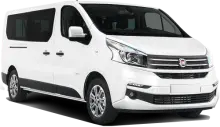


Choose the right car for your trip in Tokyo, Japan and book in minutes. Compare trusted rental options, find great daily rates, and secure convenient airport pick-up for your travel dates.
Car rental at Tokyo Haneda Airport (HND) does not make sense for every trip. Haneda is much closer to central Tokyo than Narita, so its proximity to the city often makes a car on the first day not the best decision. If you are arriving for a short city break, spending the first few days in areas with convenient transport and not planning to leave the capital immediately, renting at HND often adds parking costs, toll roads, and unnecessary urban stress. However, if after arrival you are heading to Yokohama, Hakone, the Fuji area, Kanagawa, Chiba, several locations in the Kanto region, or want to start a road trip immediately, airport pickup at HND can be very practical.
The main difference between Haneda and Narita is not only geography, but also the logic of use. Due to its proximity to the city, HND is convenient for quick entry into Tokyo, but this very advantage means that airport rental is not always needed immediately. If you will be only in central districts for a few days, it is sometimes better to get a car later, on the day of departure from the city. If the route starts immediately outside Tokyo, getting a car directly at HND is often more convenient than first going to the center and then solving the rental issue again.
For HND, the decision should be based on the actual scenario, not by inertia. If Haneda is just a convenient gateway to the city for you, a car on the first day may turn out to be redundant. If the airport is the start of a further journey, airport pickup often saves both time and energy after the flight.
| Scenario | Is it worth getting a car at HND | Why |
|---|---|---|
| First few days only central Tokyo | Often no | City transport is convenient, and parking is expensive |
| Heading immediately to Hakone, Yokohama, or the Kanto region | Yes | You can start the route immediately without extra logistics |
| Traveling with family and large luggage | Often yes | Fewer transfers after arrival |
| Route only through business districts of Tokyo | Not always | A car may turn out to be less convenient than it seems at the start |
For HND, it is important to look not only at the daily rate, but also at the full set of conditions. Before paying for the booking, check which driver's document format the company accepts, whether an international permit is specifically required for your license, which card is suitable for the deposit, what limit must be available, what is included in the insurance, and if there are surcharges for automatic transmission, a second driver, a child seat, or late pickup. For Japan, it is also important to understand in advance how toll roads work and whether a separate system or option is used for their payment.
A good trust signal for Haneda is a tariff where key conditions are clear before payment: which document is needed, how the deposit works, whether late pickup is provided, what happens in case of flight delays, and how the return is organized specifically at the airport. If these things are described vaguely, the risk of unnecessary stress after arrival is significantly higher.
| What to Check | Why it is Important |
|---|---|
| Driver's document format | Without the required document, pickup may not be confirmed even with a voucher |
| Card and deposit | Not all cards are suitable for blocking the security deposit |
| Deductible and insurance | A low rate may mean a high risk for the driver |
| Toll roads | For routes from HND, this is a noticeable part of the overall budget |
| Late pickup after flight | Important for evening or delayed arrivals |
Different rental companies at Haneda may have different pickup schemes: sometimes the desk is located directly in the airport, and sometimes the registration or the car itself is located in a separate rental zone. That is why it is useful to have precise instructions before the trip: where the registration takes place, whether a short transfer is needed, how the company handles flight delays, and what needs to be shown at pickup.
For HND, this is especially important because quick access to the city creates an illusion that everything will be maximally simple by default. In reality, practical convenience depends not on the airport's name, but on how transparently the company describes the pickup point, the route to it after arrival, and the rules for evening or shifted arrivals.
For HND, the key question is not whether you can rent a car, but whether you need it from the moment of arrival. If you leave the capital quickly, a car often provides more freedom and saves time. If you spend a few days in Tokyo, it is important to check before booking whether your hotel has parking, how much it costs, and whether it would be wiser to get a car later. Haneda's proximity to the city is an advantage, but at the same time, a reason to honestly assess whether a rental will be redundant in the first few days.
For intercity or regional trips, it is also important to consider toll roads. In Japan, they often become a significant part of the budget rather than a minor detail, so before starting the route, it is better to understand not only the rental price, but also the associated costs of the trip itself. If the route begins immediately after arrival, it is worth understanding the payment logic for such roads in advance so as not to figure it out while on the road.
One of the typical mistakes is looking only at the mention of included insurance. For HND, it is important to understand what liability actually remains with the driver, what the deductible amount is, whether glass, tires, mirrors, and the underbody are included, and what exceptions are written in the conditions. If the route starts immediately after the flight and you then travel through Japan for several days, it is sometimes more practical to take not the minimum tariff, but a more transparent package with less financial risk.
A good tariff for Haneda is not just a low figure in the catalog, but a package that works in your real scenario: documents are suitable, the deposit is manageable, late pickup is clear, and the insurance does not leave too much uncertainty after arrival.
Returning the car at Haneda should be planned with a time buffer, despite the proximity to the city. Before the flight, you need to consider not only the drive to the airport, but also refueling, finding the exact return zone, a possible car inspection, and the time to get back to the terminal if the return zone is located separately. For morning flights or routes after a long trip, this is especially important.
For HND, there is often a temptation to allocate less time due to the proximity to Tokyo, but this is not always safe. A practical buffer before return is almost always more useful than an optimistic minute-by-minute calculation on the day of departure.
| Before Return | What Should Be Done |
|---|---|
| Fuel | Check the return policy and refuel the car in advance |
| Return point | Save the exact address or map from the rental company |
| Time buffer | Allow extra time for car inspection and the drive to the terminal |
| Return confirmation | Save the document or photo in case of deposit disputes |
Car rental at Tokyo Haneda Airport is best justified when the car is needed immediately after arrival and the route quickly leads outside central Tokyo. For a correct decision, not only the price and car class are important here, but also practical details: documents, card for deposit, deductible, toll roads, parking, route scenario, and return before departure. These are what determine whether the rental at HND will be truly convenient, not just formally available.
This depends on the country of issuance of your documents, the format of the license, and the rules of the specific rental company. Before booking, it is worth checking the requirements specifically for your tariff to avoid problems during car pickup after arrival.
The payment method depends on the company, the tariff, and the rules regarding the deposit. Before booking, it is important to check not only the payment format itself, but also whether your card is suitable for blocking the deposit and receiving the car.
Excess is the part of the financial responsibility that may remain with the driver even with insurance coverage. That is why it is worth looking not only at the base rental price, but also at what risk actually remains with you in case of damage or another incident.
Yes, but for an additional fee.
Toll charges and associated costs may depend on the route, local rules, and how the rental company accounts for such payments. If you plan active travel, it is worth estimating in advance not only the rental price, but also the associated road costs in your travel scenario.
Parking convenience depends on the district, the time of day, and the format of your route. If you plan to spend a lot of time in densely built-up parts of the city, it is worth assessing in advance whether a car will truly be the most convenient option for your scenario.
Yes, Japanese drivers are usually very polite and follow the rules.
Many car rental companies have staff who speak English.
Some companies allow it, but there may be additional fees.
Basic insurance coverage depends on the company and the tariff, therefore, before booking, it is important to look not only at the option name, but at which risks are actually covered and what liability may still remain with the driver. This helps to correctly compare tariffs with each other.
Usually yes, or you will be billed for the fuel.
Information can be found online or at the car rental office.