Small cars



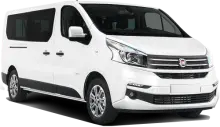


Choose the right car for your trip in Tokyo, Japan and book in minutes. Compare trusted rental options, find great daily rates, and secure convenient airport pick-up for your travel dates.
Car rental at Tokyo Narita Airport (NRT) is not suitable for every trip. If your itinerary is limited to Tokyo only, and you plan to spend most of your time in the central districts of the city, public transport is usually simpler and less stressful. However, if you arrive at NRT and immediately head to Chiba, Nikko, Hakone, the Fuji area, the Kanto prefectures, or further on an intercity route, airport pickup is often more practical than a separate trip to the city and searching for a rental agency there.
Narita is located outside of Tokyo itself, and this is exactly what makes airport rental logical for some travelers. If you arrive with heavy luggage, with children, after a long flight, or have a tight schedule with departure immediately after landing, picking up a car directly at NRT is often more convenient. If you spend the first few days in central Tokyo, airport rental may add unnecessary costs for parking, toll roads, and urban stress. Unlike Haneda, where proximity to the city sometimes justifies a delayed pickup or a complete refusal of a car in the first few days, Narita more often acts as a starting point for a further route, rather than as a convenient entry for a city-only scenario in Tokyo.
| Scenario | Is it worth taking a car at NRT | Why |
|---|---|---|
| Immediately heading to regions outside Tokyo | Yes | No need to travel separately to the city and search for a rental there |
| First few days only in central Tokyo | Often no | Urban transport is more convenient, and parking is expensive |
| Traveling with family and heavy luggage | Often yes | Fewer transfers after arrival |
| Route through Nikko, Fuji, Chiba or the Kanto region | Yes | A car provides better control over pace and logistics |
In the case of NRT, it is important to look not only at the daily price. Before booking, check what type of license is accepted by the company, whether an international permit is required specifically for your document, which card is suitable for the deposit, what limit should be on it, what is included in the insurance, and whether there are separate surcharges for automatic transmission, a second driver, a child seat, or late pickup. For Japan, it is also important to understand how toll roads work and whether the equipment or an option for their payment is included in the tariff.
| What to Check | Why it is Important |
|---|---|
| Driver's license format | Without the correct document, you may not be issued the car even with a confirmed booking |
| Deposit and card type | Not all cards are suitable for blocking the security deposit |
| Insurance and deductible | A cheap rate may mean a high risk in case of damage |
| Toll roads | This is a significant part of the budget on Japanese routes |
| Late pickup after flight | For international arrivals, it is important that the company actually handles delays |
Different rental agencies may organize the process and issuance differently: sometimes the desk is located in the terminal, and the car itself is in the rental area or at a separate lot with a short transfer. If the flight arrives in the evening, it is important that the booking includes the flight number and that the company actually handles delays rather than simply closing the desk at a fixed time. For a large airport with terminals, a good trust signal is when it is clear even before payment exactly where the pickup takes place, from which terminal or zone it is organized, and whether the pickup logic changes in case of an evening or shifted arrival.
Car rental at NRT is important to understand the local travel logic in advance. On intercity routes in Japan, toll road costs easily become a noticeable part of the budget, and in urban areas, the issue of parking is often more important than it seems during booking. If you are not going to Tokyo, but further into the region, a car from NRT often truly saves time. If the route quickly leads you to densely built-up urban areas, it is important to check in advance if the hotel has its own parking and how much it costs.
For Narita, this is especially important because the remoteness of the airport itself pushes the idea of “taking a car immediately.” But the correct decision here depends not on the airport itself, but on whether the route actually begins with a road trip, rather than a few days in the city where the car stands uselessly.
One of the typical mistakes is looking only at the label “insurance included.” For NRT, it is important to check exactly what is covered, the size of the deductible, whether tires, glass, mirrors, the lower part of the body, and what exceptions remain for the driver. For a longer route through Japan or trips after a long flight, it is often better to choose not the lowest base rate, but a tariff with more clear liability.
A good tariff for NRT is not just a low number in the catalog, but a package that works in your real scenario: documents are suitable, the deposit is feasible, late pickup is clear, and insurance does not leave too much uncertainty after arrival.
Returning the car at Narita Airport is best planned with a margin of time. Before departure, you need to consider not only the travel time, but also refueling, finding the correct return zone, car inspection, and a possible transfer back to the terminal. If the flight is in the morning or you are traveling through congested sections, the time buffer should be larger than the navigator suggests.
For a large international airport with terminals, this is especially important: even when the road to NRT seems clear, the final stage can take more time due to refueling, inspection, finding the correct return point, and internal airport logistics.
| Before Return | What to Do |
|---|---|
| Fuel | Check the return policy and refuel the car in advance |
| Return Zone | Save the exact address or instructions from the rental agency |
| Time Buffer | Allow extra time for car inspection and transfer to the terminal |
| Return Document | Save confirmation in case of disputes over the deposit |
Car rental at Tokyo Narita Airport works best for those who not planning to stay only in central Tokyo, but want to travel further into the region immediately after arrival. For the correct decision here, not only the price and car class are important, but also practical things: documents, deposit, toll roads, parking, insurance terms, pickup point, and the return scenario before departure. These are what determine whether the rental in NRT will be convenient and justified.
For rental at NRT, it is best to check this question before paying for the booking, rather than after arrival. If the format of your license does not meet the requirements of a specific rental agency, the issuance may not be confirmed even with a voucher, passport, and card for the deposit, so document requirements should be verified in advance.
For rental at NRT, payment terms are best checked before confirming the booking. Even if the rate is displayed in a currency familiar to you, the charge at pickup and the deposit are often processed in Japanese yen, so it is worth clarifying in advance which card the rental agency accepts, whether bank conversion is possible, and how this will affect the final amount of the block.
For rental at NRT, it is important to look not only at the term deductible, but also at the actual amount of risk that remains with the driver after booking. Before paying, it is worth checking how the deductible is linked to the deposit, whether glass, tires, and the lower part of the body are covered, and whether it would be more advantageous to choose a more transparent tariff if the route starts immediately after arrival or includes longer trips.
Usually no, you need to clarify with the company.
For rental at NRT, it is important to check before paying for the booking not only the fact of insurance presence in the tariff, but also what liability actually remains with the driver after the booking is made. It is useful to clarify the size of the deductible, whether glass, tires, and the lower part of the body are covered, and whether additional offers will appear at the desk, without which the base tariff looks cheaper only at the start.
For a route from NRT, toll road costs should be considered before leaving the airport, especially if you are heading a long distance immediately. Before starting the trip, clarify with the rental agency exactly how payment is made, whether a separate option or equipment is needed for passage, and how these costs will be reflected in the final calculation after returning the car.
If you take a car at NRT, but spend the first few days specifically in Tokyo, the issue of parking is best checked before booking. It is useful to find out in advance if your hotel has its own parking, whether it is paid, how convenient the entrance is, and whether it is simpler to postpone the rental until the moment of departure from the city.
For rental at NRT, this procedure is best clarified at the time of car pickup, so that in a stressful situation you already have the rental agency's contact and understand the sequence of steps. If an accident occurs, it is important to immediately notify the company, complete local formalities, record the circumstances of the event, and not postpone this until the moment of returning the car, otherwise it may affect insurance and the deposit.
For rental at NRT, age restrictions are best checked before paying for the booking, because even with a voucher, the rental agency may refuse issuance or apply a separate surcharge for a young driver. Before confirming the rate, it is worth clarifying not only the minimum age, but also driving experience requirements and possible additional payments at the desk.
For rental at NRT, this is best clarified at the time of car pickup. Before ending the rental, you should check the exact return zone, the fuel policy, and allow extra time for car inspection and the road back to the terminal, especially if the flight is in the morning or the route ends after a longer trip.
For rental at NRT, this is best clarified at the time of car pickup, rather than at the end of the route. Before returning, you should check the fuel policy, find a convenient gas station on the way to the airport in advance, and allow some time for this stop, especially before a morning flight.
Some companies may set restrictions, please clarify during rental.